Friday, 14 October 2016

SHAMEFACED

News reported (in India) is reproduced below:
  • Bareilly teen rape victim gives birth in ambulance as nurse refuses to help – Hindustan Times
  • Bareilly teen rape victim denied nod to abort, delivers baby in ambulance – The Indian Express
  • Raped teen loses abortion battle, delivers baby boy in ambulance – The Times of India

I will consider this as quirk of fate where the victim is pained more and the society is watching shamelessly.

I wish there was Lord Krishna today who could save the victim the way he saved Draupadi when society (Great Pandav and Kaurav warriors - Males) witnessed the act of disrespecting Draupadi. The birth of baby boy by a teen girl against her wishes is disrespecting of women in contemporary time.

Here, Allahabad High Court denied abortion and asked CMO to check the medical condition of the 14 / 16 year old girl (travesty of newspaper reporting age appearing different).

I recollect the advertisements appearing in Doordarshan where it stated that do not marry a girl before she is 18 years. These advertisements were supported by Governments as this will uplift the Female Gender in a Male dominated society.

Few questions:

·         Is definition of Abortion under the Medical Termination of Pregnancy Act overrules the victims plea?

o   Plea: “she will not be in a position to raise the baby because of her weak financial situation and because the child will be a constant reminder of my trauma and shame"

·         Can the Court take the custody of the baby and raise it as its parent?

o   Foolish: Obviously this will be a foolish question as an institution cannot be a living person

·         Is a women who got pregnant has the right to make a statement on abortion or the male genders or one who has never been pregnant (both Institutions and Living Species) should speak about abortion?

o   Mother Teresa - “I feel the greatest destroyer of peace today is 'Abortion', because it is a war against the child... A direct killing of the innocent child, 'Murder' by the mother herself... And if we can accept that a mother can kill even her own child, how can we tell other people not to kill one another? How do we persuade a woman not to have an abortion? As always, we must persuade her with love... And we remind ourselves that love means to be willing to give until it hurts...” 

·         What is insensitivity?

o   Margaret Sanger - “No woman can call herself free until she can choose consciously whether she will or will not be a mother.” 

o   Marilyn Manson - “We don't like to kill our unborn; we need them to grow up and fight our wars.” 

It’s very frustrating that male genders talk about pro life and right to live when it is there fraternity which causes the havoc on fellow species.

Do we mankind has to go to 2116 and make a statement like Queen Elizabeth “Queen gives royal pardon to Alan Turing, the WWII codebreaking hero who was convicted for being gay then sterilised by the state” (Dailymail , UK).

What will be our statement “We apologize for all the cruelty we showered on fellow species named women”.

I don’t want to take a rebirth and make a statement in 2116.

Lets remember what Swami Vivekananda said:

"Educate your women first and leave them to themselves; then they will tell you what reforms are necessary for them. In matters concerning them, who are you?"

"There is no hope for that family or country where there is no estimation of women, where they live in sadness. For this reason, they have to be raised first."

References:

Sunday, 9 October 2016

Modern Banking System

I always wondered how money comes into existence in our economy. Text books says Reserve Bank of India (RBI) prints the money.

Ideally Government should collect the bag full of cash from RBI and should back it up with Assets they have created. Is it fair to sit and calculate that the total money printed (excluding coins) by RBI is backed by an Asset or Loans that Government lends it to others such as Banks who will further lend to companies / individuals.

However there are other situations also when Money was printed.

One instance (Source: www.firstpost.com -  December 11, 2013) is listed below:

“The dollar-rupee swap window that was open for banks between September and November 2013 attracted $34 billion. Since the idea of the swap is to allow banks to borrow in dollars and convert the money into rupees at favourable costs, this has resulted in what could probably be the largest single money printing exercise in India over such a short period of time.

The net effect of the $34 billion inflows is an injection of Rs 2,100 billion (Rs 2,10,000 crore) into the banking system. This injection is primary in nature, i.e money was printed by the Reserve Bank of India (RBI). The mechanics of the swap transaction are given at the end of the analysis. When we say printed, it means the money exists in the books of banks as cash.”

So my understanding about Assets in place for money printed is thrown out of window.

I got struck badly when I understood that there is difference in Money and Currency. I believe many educated or degree holders like CA / MBA / PHD (in commercial subjects) are not aware what the difference is and how the banking system works.

I bet 99.99 % do not know it. So what is the problem?

Is it that we are not educated about it or partly it is shared in books or the Modern Banking System has become too complicated for 99.99% of the citizens.

Here I am not going to answer this complex question. 

On the contrary it is better the reader visits the YouTube link (given below) on The Biggest Scam In The History Of Mankind and understand what is actually happening and how modern banking system is a delusion which will be blown, when we have to wait and watch. This pertains to Modern Banking System in The United States of America.

It seems from the You Tube video, it is better to live in a barter system where the owner of a service / an asset knows what he gets in exchange.

The other biggest puzzle by the modern day banking system especially Federal Reserve is the Quantitative Easing. In simple terms, to avoid deflation Federal Reserve is creating electronic money. Here the effort is to create inflation in their economy.

However, in turn who gets that money or how it is channeled there is no knowledge about it. The best part Federal Reserve does not know when to unwind it, what will be the impact and still inflation of 2% is not reached.

I will reproduce the quotes from the You Tube link to summarize Modern Banking System:

“The modern banking system manufactures “money” out of nothing; and the process is, perhaps, the most, astounding piece of “sleight of hand” that was ever invented. In fact, it was not invented. It merely “grew”. … Banks in fact are able to create (and cancel) modern “deposit money”, just as much as they were originally able to create, or call in, their own original forms of private notes. They can, in fact, inflate and deflate, i.e., mint, and un-mint the modern “ledger-entry” currency.” 
- Major L. L. B. Angas 

"Banking was conceived in iniquity and was born in sin. The bankers own the earth. Take it away from them, but leave them the power to create money, and with the flick of the pen they will create enough deposits to buy it back again. However, take away from them the power to create money and all the great fortunes like mine will disappear and they ought to disappear, for this would be a happier and better world to live in. But, if you wish to remain the slaves of bankers and pay the cost of your own slavery, let them continue to create money."
 - Josiah Charles Stamp, 1st Baron Stamp.

Enjoy the You Tube link given below under references.

References:


Difference between Money and Currency:


The Biggest Scam In The History Of Mankind :


Possible impact of Quantitative Easing - https://www.youtube.com/watch?v=xHU5nj97HNM&list=FL_ywfvIR2JrnMuZt33y7QYQ

Quotes:

Monday, 3 October 2016

Learnings from Book India Discovered

Recently I completed reading ‘India Discovered’ by John Keay. It was published in 1981. I will consider it a well researched book. The author has covered many grounds and the references drawn from various sources helps to establish the strength of the book.

The author has correctly stated that ‘Now, in place of the circus, we have the museum’. He rightly mentioned it as outsiders considered India was a circus with snake charmers. Thanks, to the various surveyor generals the perception got changed.

I agree with twinning who stated ‘….the cave (i.e. India) was in darkness. How far back it went no one could tell’. Even now India is one of the un-explored portions of earth.

Many a times in exploring history of a country or the un-explored portions of earth, as Hodgson stated, more than languages (here we are talking about early 19th / 20th centuries), lack of patience was the culprit in exploring a country like India.

Peaceful India

The internal functioning of India during Chandragupta II period, around  400 A.D., can be felt by the freedom Fa Hsien had in travelling from one part of the country to other without any trouble i.e. without any ‘crime or repression’. Author Keay states ‘compared with the state of the Roman Empire at that time, it looked as if India under the Guptas was the most congenial place in the world’.

Men of theory being blindly followed

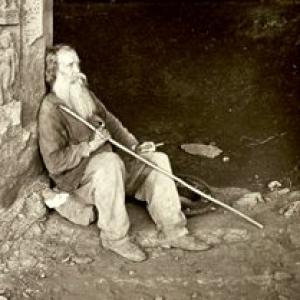
Appropriate example of the incorrect people writing about India and use it as reference was James Mill (father of John Stuart). He published book ‘History of British India’ without stepping into India. James Mill strongly indicted Indian society and its culture.  The book became the standard work of reference on India for Britishers.  

The incorrect position of James Mill was heavily criticized by Amartya Sen in his article History and The Enterprise of Knowledge appeared in newhumanist.org.uk on 31st May 2007. In the same article Sen has mentioned about another scholar Alberuni, who was completely opposite of James Mill:

“It is, in fact, interesting to compare Mill's History with another history of India, called Ta'rikh al-hind (written in Arabic eight hundred years earlier, in the 11th century) by the Iranian mathematician Alberuni. Alberuni, who was born in Central Asia in 973 A.D., and mastered Sanskrit after coming to India, studied Indian texts on mathematics, natural sciences, literature, philosophy, and religion. Alberuni writes clearly on the invention of the decimal system in India (as do other Arab authors) and also about Aryabhata's theories on the earth's rotation, gravitation, and related subjects.”

Further, Mr Keay states ‘Understanding its qualities meant understanding its inspiration, its ideals, its symbolism and its techniques’. Dr Ernest B Havell believed ‘ no European can understand or appreciate Indian art who  does not divest himself of his western preconceptions , endeavor to understand Indian thought, and place himself at the Indian point of view’.

Indian and European Artist

Describing the Indian art and its separation from the western one following example nails it:
‘…leonardo might have dissected a dog before drawing it, the Indian artist was not especially interested in how a dog worked; he wanted to get at the essence of dog.’

Unknown gems

The book introduced me to palaces of Datia and Orchha. I never knew that these palaces were work of giants which was praised by Sir Edwin Lutyens. The artistry of the palaces was such that ‘ it is hard to tell where nature’s work ends and man’s begins’. Datia and Orchha was build by Rajah Bir Singh Deo.

The tragedy of palaces like Datia and Orchha was summed up correctly as ‘ Several thousand people a d ay visit the Moghul palaces of Delhi and Agra; Scarcely a single soul disturbs the rats and the bats at Datia and Orchha. Havell’s rhapsodies and Lutyens’ admiration have changed nothing. It says much for the formative and lasting character of James Fegusson’s work that they have yet to find their true place in the scheme of India’s Monuments’. This statement by Keay is equally valid today i.e. after 35 long years (post publishing of this book). Still many Indians have never heard of Datia and Orchha.

Pain of Lost Work - Major Robert Gill, The unsung hero

An interesting section on misfortune can be obtained from historical persons such as Major Robert Gill. As is I will reproduce here that section:

“On Fergusson’s recommendation, Major Robert Gill arrived at Ajanta in 1844 and commenced a painstaking record of all the paintings. Twenty- seven years later he was still engaged on the job. In the story of British attempts to record India’s past Gill’s dedication is unrivalled; sadly, though, it was futile. His oil paintings of the Ajanta murals went on display at the Crystal Palace, London, alongwith the first Gandhara sculptures to reach England. In December 866 all were destroyed by fire; the canvases had not even been photographed. With quite staggering resilience, Gill returned to Ajanta to begin his life’s work; but he died, on site, a year later”

Nature safeguards itself from its own fury

“His (Major Gill) place was taken, 1872, by John Griffiths of the Bombay School of Art, and the work of copying continued for a further thirteen years, Again the results were sent to London. They went on display in the Victoria and Albert Museum and again they were destroyed by fire. But this time photographs had been taken. In 1897, nearly fifty years after their discovery, the Ajanta paintings were at last published and the art world could being to form some opinion of them”

What standards are?

Currently, corporations, across the world struggle to have a common accounting standard. The difficulty is felt in reading the financial statements of the companies in Asia as they have different accounting standard. This is despite corporatization was born in the last few decades. Against this back drop the best example of maintaining a common standard across 700 years was observed in Ajanta painting. Below is a reproduction of Sir John Marshall who had written an introduction in the Illustrated London News:

“…. Yet in spite of their diversity of size and their varying age and excellence, there is remarkable unit in their general effect, for all the artists of Ajanta followed the same traditional methods in their drawing, and observed the same restraint and reticence in their colouring and tones, …. In these paintings there was no affectation, no striving after meretricious effects, Centuries of  experience had taught the artist that in line and silhouette lay the true secret of mural painting, and their drawing to a pitch of excellence that has seldom been equaled.”

Let me be honest here I visited Ajanta as a traveler two times and I could not notice the difference of 700 years. Today, I appreciate the standards that were maintained for seven centuries (post King Ashoka Era).

With all the modern technology and advanced knowledge at our feet, investors are struggling to have common accounting standards.

Lovers of Indian History please read this book.

References:

Images:
James Mill Image source http://www.utilitarian.net/jmill/


Saturday, 1 October 2016

Promise to be Vigilant

I always enjoyed reading Coomi Kapoor column in Indian Express. Her book, The Emergency has brought very positive reviews. The book has shared incidents which hitherto many of the younger generations like me were unaware about.

I have not read the book, but this is from the interview with Newslaundary wherein she shared the incidents and very fairly accepts when she cowardly acted ( 25:01 - NL Interviews Coomi Kapoor – Part 2).

The interview was very candid and down to earth by Ms Kapoor. Nowhere she pretended that she knows the fact and was custodian of an important event in the history of India (post independence).

Thanks Newslaudary for the interview and I believe this interview should be viewed and shared amongst all the younger generations.

From the interview I wish to state herein two statements which I appreciated no sooner they were spoken by Ms Kapoor:

  • Eternal Vigilance is the price for freedom ( 25:40 - NL Interviews Coomi Kapoor – Part 2)
  • Arrogance of power does not change ( 23:53 - NL Interviews Coomi Kapoor – Part 2)

I think younger generations have taken for granted Liberty. They need to wake up and remember:

 "It is above all in the present democratic age that the true friends of liberty and human grandeur must remain constantly vigilant and ready to prevent the social power from lightly sacrificing the particular rights of a few individuals to the general execution of its designs. In such times there is no citizen so obscure that it is not very dangerous to allow him to be oppressed, and there are no individual rights so unimportant that they can be sacrificed to arbitrariness with impunity."
 - Alexis De Tocqueville

“Let us never forget that government is ourselves and not an alien power over us. The ultimate rulers of our democracy are not a President and senators and congressmen and government officials, but the voters of this country. “
- Franklin D Roosevelt

“Eternal vigilance is the price of liberty”
 – Thomas Jefferson


References:
Interview links:
Quotes:

Tuesday, 27 September 2016

"Tutari" Instead Of "Bell"

Two quotes I have to share with respect to Imitation. Now why this imitation issue arose?

Article in Indian Express stated that “Cricket Association of Bengal will install a Lord’s-like bell at the Eden Garden’s, from the second Test between India and New Zealand. Former skipper Kapil Dev will ring the bell– put up at the lower tier of the Club House underneath the Eden Clock.”

Quotes:

By three methods we may learn wisdom: First, by reflection, which is noblest; second, by imitation, which is easiest; and third by experience, which is the bitterest – Confucius

Almost all absurdity of conduct arises from the imitation of those who we cannot resemble - Samuel Johnson

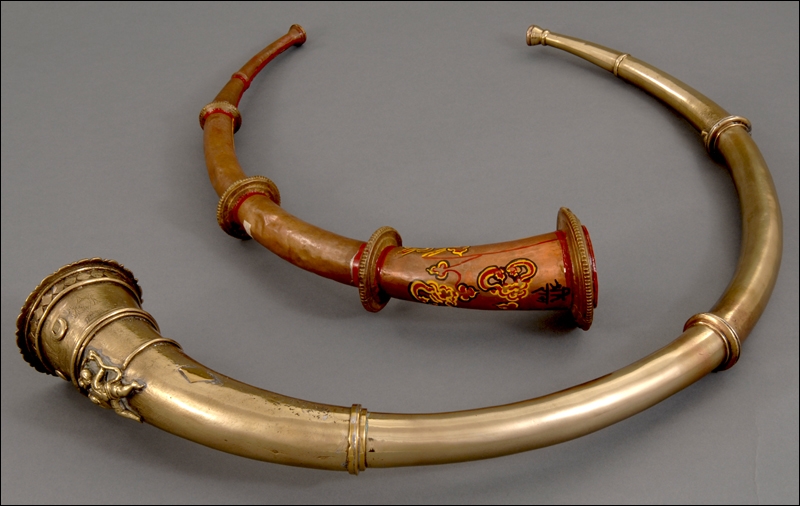
I wish to state that Cricket Association of Bengal took the easiest one even though there is no resemblance in the culture of two countries. Ideally, an Indian instrument, "tutari", could have been used. A bell when pressed by a dignitary, “tutari” ( or any other Indian instrument) sound will be played before start of a match from a “tutari” styled speaker / sound box. This will help in relating the event more with Indian culture.

A poem befitting the event and "tutari" is listed below:

तुतारी

एक तुतारी द्या मज आणुनि
फुंकिन मी जी स्वप्राणाने
भेदुनि टाकिन सगळी गगनें
दीर्ध जिच्या त्या किंकाळीने
अशी तुतारी द्या मजलागुनी

अवकाशाच्या ओसाडीतले
पडसाद मुके जे आजवरी
होतील ते वाचाल सत्वरी
फुंक मारीता जिला जबरी
कोण तुतारी ती मज देईल?

रुढी,जुलूम यांची भेसूर
संताने राक्षसी तुम्हाला
फाडूनी खाती ही हतवेला
जल्शाची का?पुसा मनाला!
तुतारीने या सावध व्हा तर!

चमत्कार!ते पुराण तेथुनी
सुंदर,सोज्वळ गोड मोठे
अलिकडले सगळे खोटे
म्हणती धरुनी ढेरी पोटे
धिक्कार अशा मूर्खांलागुनी

जुने जाऊ द्या मरणालागुनी
जाळुनी किंवा पुरुनी टाका
सडत न एक्या ठायी ठाका
सावध! ऎका पुढल्या हाका
खांद्यास चला खांदा भिडवूनी

प्राप्तकाल हा विशाल भूधर
सुंदर लेणी तयात खोदा
निजनामे त्यावरती नोंदा
बसुनी का वाढविता मेदा?
विक्रम काही करा,चला तर!

धार धरलिया प्यार जीवावर
रडतील रडोत रांडापोरे
गतशतकांची पापे घोरे
क्षालायाला तुमची रुधिरे
पाहिजेत रे!स्त्रैण न व्हा तर!

धर्माचे माजवुनी अवडंबर
नीतीला आणिती अडथळे
विसरुनीया जे जातात खुळे
नीतीचे पद जेथे न ढळे
धर्म होतसे तेथेच स्थिर

हल्ला करण्या तर दंभावर तर बंडावर
शूरांनो! या त्वरा करा रे!
समतेचा ध्वज उंच धरा रे!
नीतीची द्वाही पसरा रे!
तुतारीच्या ह्या सुराबरोबर

नियमन मनुजासाठी,मानव
नसे नियमनासाठी,जाणा;
प्रगतीस जर ते हाणी टोणा
झुगारुनी दे देऊनी बाणा
मिरवा नीज ओजाचा अभिनव!

घातक भलत्या प्रतिबंधावर
हल्ला नेण्या करा त्वरा रे!
उन्न्तीचा ध्वज उंच धरा रे!
वीरांनो! तर पुढे सरा रे
आवेशाने गर्जत हर-हर!


पुर्वीपासुनी अजुनी सुरासुर
तुंबळ संग्रामाला करिती
संप्रति दानव फ़ार माजती
देवावर झेंडा मिरवीती!
देवांच्या मदतीस चला तर!


By : Krishnaji Keshav Damle (March 15, 1866 - November 7, 1905)

It seems we are still following the colonial masters.

Sources and References:


Note: For partial translation of poem please visit https://en.wikipedia.org/wiki/Tutari_(Trumpet)

Image of “tutari”:


Image of Lords Bell:


Saturday, 24 September 2016

Attempt for a "SPOTLIGHT"

I watched Spotlight (2015) movie, which won Academy Award for Best Picture and Best Original Sceenplay.  The story is about sexual abuse by Priests in Boston.

Essence of the incident displays depth of investigative journalism by The Boston Globe Reporters and how it managed to pull out a story which effected individuals across Boston. The movie in its fag end states that 249 priests and 1,000 victims (estimated) were involved.

I wish to know how many such investigative journalism was covered in mainstream papers around last 25 years, in India. When I mean coverage, like the impact made by Spotlight.

In list of places where abuses took place, in Spotlight movie, a name from India cropped up i.e. Ollur , Kerala. That was a surprise for me. Post this picture, on Google Search, barring Deccan Chronicle, Hindustan Times (i.e. Mainstream papers in India), none reported it, especially, newspapers claiming maximum readership. Surprising it got skipped / not considered worth.

Out of my blind shot I wish to list down the big story that appeared in India:
·         Bofors
·         Harshad Mehta
·         JMM bribery case
I wish there is an attempt made by leading journalists across India to come up with a list and state Articles / Stories which had an impact over society /  System.
Selective stories get reported in India for Godmen, Politicians etc. but they just pop and disappear. The System functions as is with no impact.
Spotlight has to be seen by every individual to understand that Abuses take place around us what we do is ignore it.
I think Indian Reporters need to give a thought on what they report.
It’s time to ponder which newspaper we read daily and how many articles on it have made its mark on the Society / System.
OR
They are just selling Advertisement slots with news around it.
References:


Friday, 16 September 2016

Learnings from Book Antifragile

Whenever we read a book we try to co-relate it with our experiences and beliefs. We enjoy reading it and quote extensively in many occasions. One such author whom I have quoted many times and enjoyed reading his work is Nassim Nicholas  Taleb.
I was fortunate enough to read his three books i.e. Fooled by Randomness, Black Swan and the latest Antifragile. I have always recommended my friends / acquaintances to read Fooled by Randomness / Black Swan.
Now in that list I will add Antifragile also. What I like is the author strongly agreeing to the role of randomness. Somehow, randomness is something I have spoken many times with friends. They have rejected it out rightly.
There are few who actually manage to poke holes in theories and foremost in them is the Taleb. It will be difficult for others (especially corporate climbers, theorist) to enjoy this book. The extent of subject linking and depth of knowledge of Taleb is unchallenged.
As compared to Fooled by Randomness and Black Swan this book has extensively touched upon the importance of what has been survived since ancient times. In short the importance of traditions which has been ignored by many has been held high by Taleb.
The journey from start to end was highly energizing and satisfactory for me. With no single doubt I will be recommending this book for reading.

I have listed below the sections which I liked the most from Antifragile as my learning or my belongings for my onward journey. The bold part below is for my understanding from the various statements appeared in Antifragile. Below the bold, statement is reproduced from the book as is for my / readers understanding.

Robustness
Given the unattainability of perfect robustness, we need a mechanism by which the system regenerates itself continuously by using, rather than suffering from, random events, unpredictable shocks, stressors, and volatility.
Risk Management
Risk management as practiced is the study of an event taking place in the future, and only some economists and other lunatics can claim—against experience—to “measure” the future incidence of these rare events, with suckers listening to them—against experience and the track record of such claims.
Basic difference of Fragile, Antifragile and Robust
Recall that the fragile wants tranquility, the antifragile grows from disorder, and the robust doesn’t care too much.
Opposite of fragile
 Logically, the exact opposite of a “fragile” parcel would be a package on which one has written “please mishandle” or “please handle carelessly.” Its contents would not just be unbreakable, but would benefit from shocks and a wide array of trauma. The fragile is the package that would be at best unharmed, the robust would be at best and at worst unharmed. And the opposite of fragile is therefore what is at worst unharmed.
Abundance is harder for us to handle than scarcity.
Most humans manage to squander their freetime, as free time makes them dysfunctional, lazy, and unmotivated—the busier they get, the more active they are at other tasks.
Nature
Every random event will bring its own antidote in the form of ecological variation. It is as if nature changed itself at every step and modified its strategy every instant.
Remember
Someone paid a price for the system to improve.
Respecting entrepreneur
Most of you will fail, disrespected, impoverished, but we are grateful for the risks you are taking and the sacrifices you are making for the sake of the economic growth of the planet and pulling others out of poverty. You are at the source of our antifragility. Our nation thanks you.
Difference between Employee and Self Employed
One has the illusion of stability, but is fragile; the other one the illusion of variability, but is robust and even Antifragile.
On Planning: anything locked into planning tends to fail precisely because of these attributes
it is quite a myth that planning helps corporations: in fact we saw that the world is too random and unpredictable to base a policy on visibility of the future. What survives comes from the interplay of some fitness and environmental conditions.
About Risk analysis
 It is hard to explain to naive data-driven people that risk is in the future, not in the past.
Importance of randomness
When some systems are stuck in a dangerous impasse, randomness and only randomness can unlock them and set them free. You can see here that absence of randomness equals guaranteed death.
Good example of centralization
Indeed, the U.K. health service was operating under the principle that a pin falling somewhere in some remote hospital should be heard in Whitehall (the street in London where the government buildings are centralized).
Rewards for Non action
I’ve looked in history for heroes who became heroes for what they did not do, but it is hard to observe nonaction; I could not easily find any. The doctor who refrains from operating on a back (a very expensive surgery), instead giving it a chance to heal itself, will not be rewarded and judged as favorably as the doctor who makes the surgery look indispensable, then brings relief to the patient while exposing him to operating risks, while accruing great financial rewards to himself.
Procrastination
Procrastination turned out to be a way to let events take their course and give the activists the chance to change their minds before committing to irreversible policies. There is a Latin expression festina lente, “make haste slowly.” The Romans were not the only ancients to respect the act of voluntary omission. The Chinese thinker Lao Tzu coined the doctrine of wu-wei, “passive achievement.”
Time and Fragility
Time is the best test of fragility—it encompasses high doses of disorder—and nature is the only system that has been stamped “robust” by time. But some philosophasters fail to understand the primacy of risk and survival over philosophizing, and those should eventually exit the gene pool—true philosophers would agree with my statement.
Cause of Greed
 But lack of vigilance is not the cause of the death of a mafia don; the cause of death is making enemies, and the cure is making friends.
Simplicity
 People with too much smoke and complicated tricks and methods in their brains start missing elementary, very elementary things. Persons in the real world can’t afford to miss these things; otherwise they crash the plane. Unlike researchers, they were selected for survival, not complications. So I saw the less is more in action: the more studies, the less obvious elementary but fundamental things become; activity, on the other hand, strips things to their simplest possible model.
Theory and Practice
 As Yogi Berra said, “In theory there is no difference between theory and practice; in practice there is.”
On Blow ups
 Traders trade → traders figure out techniques and products → academic economists find formulas and claim traders are using them → new traders believe academics → blowups (from theory-induced fragility)
Men brought up by Street (disorderliness)
Some can be more intelligent than others in a structured environment—in fact school has a selection bias as it favors those quicker in such an environment, and like anything competitive, at the expense of performance outside it. Although I was not yet familiar with gyms, my idea of knowledge was as follows. People who build their strength using these modern expensive gym machines can lift extremely large weights, show great numbers and develop impressive-looking muscles, but fail to lift a stone; they get completely hammered in a street fight by someone trained in more disorderly settings.
Their strength is extremely domain-specific and their domain doesn’t exist outside of ludic—extremely organized—constructs. In fact their strength, as with overspecialized athletes, is the result of a deformity. I thought it was the same with people who were selected for trying to get high grades in a small number of subjects rather than follow their curiosity: try taking them slightly away from what they studied and watch their decomposition, loss of confidence, and denial. (Just like corporate executives are selected for their ability to put up with the boredom of meetings, many of these people were selected for their ability to concentrate on boring material.) I’ve debated many economists who claim to specialize in risk and probability: when one takes them slightly outside their narrow focus, but within the discipline of probability, they fall apart, with the disconsolate face of a gym rat in front of a gangster hit man.
About via negative
 For the Arab scholar and religious leader Ali Bin Abi-Taleb (no relation), keeping one’s distance from an ignorant person is equivalent to keeping company with a wise man.
Finally, consider this modernized version in a saying from Steve Jobs
“People think focus means saying yes to the thing you’ve got to focus on. But that’s not what it means at all. It means saying no to the hundred other good ideas that there are. You have to pick carefully. I’m actually as proud of the things we haven’t done as the things I have done. Innovation is saying no to 1,000 things.”
About life Longevity
So the longer a technology lives, the longer it can be expected to live. This, simply, as a rule, tells you why things that have been around for a long time are not “aging” like persons, but “aging” in reverse. Every year that passes without extinction doubles the additional life expectancy. This is an indicator of some robustness. The robustness of an item is proportional to its life!
On Scaling up
Recall the discussion of municipal properties—they don’t translate into something larger because problems become more abstract as they scale up, and the abstract is not something human nature can manage properly. The same principle needs to apply to urban life: neighborhoods are villages, and need to remain villages.
Missing the picture
Now we can see the pattern: iatrogenics, being a cost-benefit situation, usually results from the treacherous condition in which the benefits are small, and visible—and the costs very large, delayed, and hidden. And of course, the potential costs are much worse than the cumulative gains.
Nature’s way
 Just as there is a dichotomy in law: innocent until proven guilty as opposed to guilty until proven innocent, let me express my rule as follows: what Mother Nature does is rigorous until proven otherwise; what humans and science do is flawed until proven otherwise.
Basic truths
 Let us remember that we are not designed to be receiving foods from the delivery person. In nature, we had to expend some energy to eat. Lions hunt to eat, they don’t eat their meal then hunt for pleasure. Giving people food before they expend energy would certainly confuse their signaling process. And we have ample evidence that intermittently (and only intermittently) depriving organisms of food has been shown to engender beneficial effects on many functions.
Beautiful statement
 If you take risks and face your fate with dignity, there is nothing you can do that makes you small; if you don’t take risks, there is nothing you can do that makes you grand, nothing. And when you take risks, insults by half-men (small men, those who don’t risk anything) are similar to barks by nonhuman animals: you can’t feel insulted by a dog.
Skin in the Game
Hammurabi’s code—now about 3,800 years old—identifies the need to reestablish symmetry of fragility, spelled out as follows:
If a builder builds a house and the house collapses and causes the death of the owner of the house—the builder shall be put to death. If it causes the death of the son of the owner of the house, a son of that builder shall be put to death. If it causes the death of a slave of the owner of the house—he shall give to the owner of the house a slave of equal value.